Process characteristics of metal L-PBF
Process characteristics of L-PBF
Highly accurate and fully dense parts
Metal Laser Powder Bed Fusion (L-PBF) is capable of producing high-quality parts and is widely used across many industries for a broad range of applications.
This section provides an overview of the most important process characteristics.
What you will find in this section
Design guidelines
High design freedom only limited by support structures
Regarding the design of parts fabricated with L-PBF technology, several principles have to be considered. Overhanging structures must be braced by support structures to enable heat dissipation and to avoid part deformations due to internal stresses.
Horizontal holes or channels have to be supported, too, or designed in a drop shape to avoid overhangs. Minimal wall-thickness depends on the optical resolution of the machine and parameter set. In general, a wall-thickness of more than 1 mm is recommended.
Theoretically, the maximum part size depends only on the build volume of the machines and is in the range of several decimeters in all directions for standard machines up to >1m for large-scale machines. In practice, process stability and resulting residual stresses in massive metal parts have to be considered and may limit the component size.
When designing a part for L-PBF, the guidelines presented in this chapter can act as a general rule of thumb for designers. Once it comes to the actual printing of the part, machine- and process-related aspects then need to be considered and might give additional design freedom or add restrictions.
-
Typical part size
Typical part sizes range from 15 mm to 300 mm. Larger parts are possible but can cause complications due to distortion.
-
Resolution
Layer thicknesses are in a range of 0.025 – 0.09 mm. The typical geometrical accuracy is in the range of ± 50-100 µm, even higher detail processes exist.
-
Surface roughness
The surface roughness depends on the layer thickness and the material. Typical as-built Ra values are in the range of approximately 8–15 µm, depending on material, orientation, and process parameters.
-
Wall thickness
Very thick sections can increase residual stresses and distortion risk. Wall thicknesses of roughly 0.8–10 mm are commonly used in practice. Thinner walls may be possible under controlled conditions but are typically limited to non-load-bearing features.
-
Hollow bodies
Hollow bodies are possible as long as the support material and residual powder can be removed.
-
Shrinkage
No geometric shrinkage from a sintering step occurs, but dimensional deviations due to thermal distortion and residual stresses must be considered.
-
Distortion
Residual stresses can cause distortion. Especially for overhangs and large parts, distortion can be a problem. Advanced simulation tools are available.
-
Supports
Usually overhangs of around 45° can be built support-free. In specific cases and with optimized process strategies, lower overhang angles may be achievable, but typically require careful validation.
-
Lattice
Lattice structures are possible and easy to achieve.
Materials
Laser Powder Bed Fusion material variety
For L-PBF a large variety of alloys is commercially available. The most important prerequisite is a good weldability. Furthermore, the material must be available as a powder with a suitable particle size distribution. The powder fraction is system and process specific and typically ranges from roughly 15–60 µm, depending on system and process setup. With an adaptation of process parameters larger as well as finer powder fractions are possible, too. Very fine powder fractions tend to agglomerate during handling and coating due to extremely fine dust particles in the distribution and should be avoided.
Typical alloys processed with L-PBF are Ti-6Al-4V, CoCr, stainless and tool steels, nickel-based superalloys, aluminum alloys and also precious metals. High purity copper is difficult in processing with today’s machine systems as commonly used infrared laser wavelengths are only poorly absorbed.
-
Stainless steel alloys
Stainless steel is widely available.
-
Maraging Steel
Maraging steels are possible with L-PBF.
-
Aluminum
Aluminum alloys are possible and available. High-strength aluminum alloys are under continuous development but remain challenging due to hot cracking and process sensitivity.
-
Titanium Alloys
Titanium alloys are available for L-PBF.
-
Nickel based Alloys
Nickel based alloys are available for L-PBF.
-
Carbides
Carbide-based materials are very challenging for L-PBF and are generally limited to research or specialized composite approaches.
-
Copper and Bronze
Copper processing is possible with process adaptations such as green lasers, increased laser power, or tailored scan strategies.
-
Cobalt
Cobalt alloys are available for L-PBF.
-
Magnesium
Magnesium has been processed in R&D environment but is not commercially available.
-
Precious metals
Some precious metals like platinum or gold are available for L-PBF.
Material Properties
Laser Beam Powder Bed Fusion with high material properties
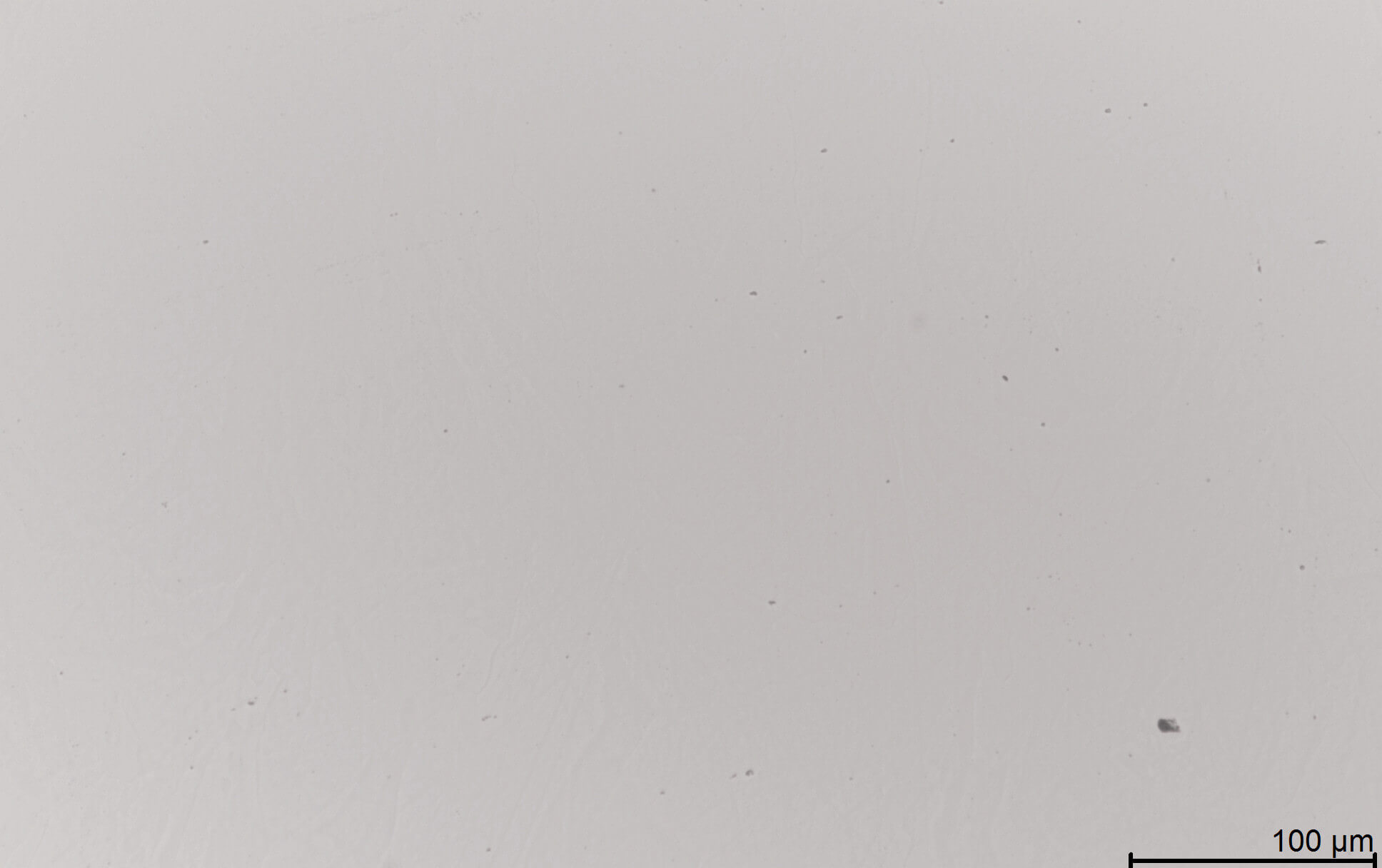
Parts fabricated with L-PBF technology exhibit similar properties as parts fabricated with conventional methods. Parts typically achieve relative densities above 99.5–99.9 %, depending on material and process parameters. However, the surface is rather rough due to staircase effects or adhering powder particles. Functional surfaces typically require post processing to decrease surface roughness.
Due to high temperature gradients during cooling a fine-grained microstructure is the result in the part. In comparison to conventional material properties, L-PBF parts typically exhibit high static mechanical strength compared to conventionally manufactured equivalents. Reduced elongation at break compared to wrought material may be observed, depending on material, build orientation, and heat treatment. Using common heat treatments, the material properties can be influenced as desired.
Fatigue resistance is highly dependent on surface quality, i.e. surface defects, and residual porosity. Parts exhibit good fatigue strength, if post processing achieved high surface quality and residual porosity was reduced through hot isostatic pressing.